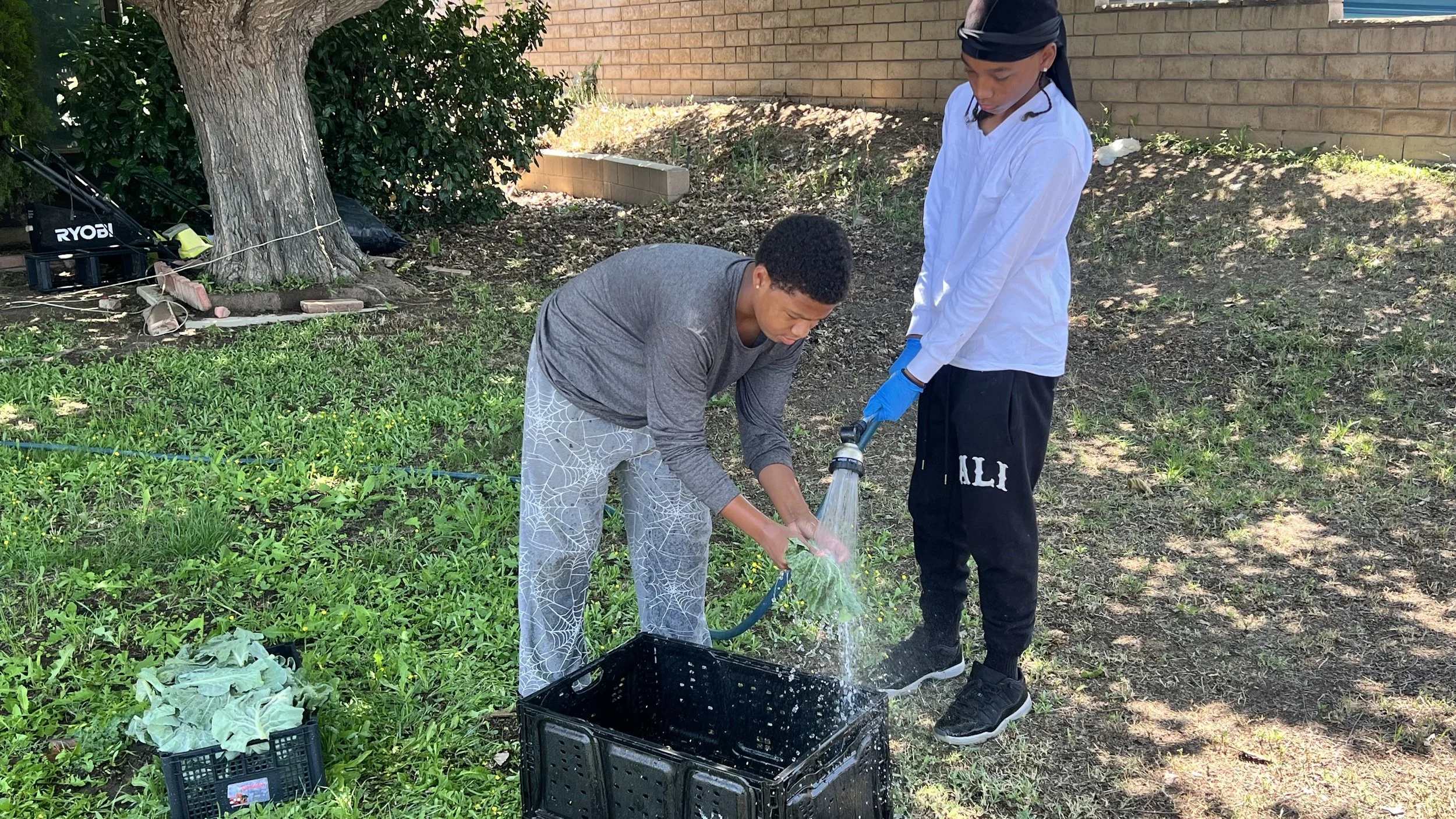
Soulful Soil Farms is a Southern California–based nonprofit rooted in farming, education, and community care.
Our farm begins at home — in soil turned by hand, in seeds planted with intention, in the belief that growing food changes more than what’s on a plate.
It changes how people see themselves, their health, and their future.
We are farmers.
We are educators.
We are neighbors and community members.
OUR MISSION
At Soulful Soil Farms, we build gardens, cultivate farms, and strengthen communities by teaching sustainable agriculture and land stewardship. Through hands-on education, mentorship, and partnerships, we increase access to fresh food, promote wellness, and equip people of all ages with the tools to grow their own food.
WHO WE ARE
Soulful Soil Farms operates from a working home farm that serves as a living example of what’s possible. From there, we extend our work into schools, neighborhoods, and shared community spaces.
We teach people how to grow food wherever they are — in backyards, raised beds, small urban lots, containers, or repurposed spaces. Whether someone has acres or a balcony, we show them how to steward what they have.
WHAT WE DO
Farm & Garden Development
We design, build, and revitalize gardens and small-scale farms in underserved communities, transforming unused land into productive, educational spaces.
Youth & Community Education (S.A.G.E.™)
Our Sustainable Agriculture Gardening Education program provides structured, hands-on learning that teaches food systems, soil health, seasonal growing, and leadership development.
Workshops & Skill Building
We train community members in composting, water conservation, sustainable growing practices, and land care — skills that support both wellness and economic opportunity.
Growing in Any Space
We emphasize practical solutions for small-space and urban growing, ensuring access to food production knowledge regardless of land size.
WHY THIS WORK MATTERS
Access to fresh food, land, and agricultural knowledge has not been equally distributed. Many communities face systemic barriers shaped by disinvestment, policy decisions, and limited access to resources.
We address these challenges by increasing local food production, teaching practical growing skills, and building community-led food systems.
Agriculture was our first classroom. The land was our first teacher.
Agriculture was our first classroom. The land was our first teacher.